



Australia Skilled Migration Visas 189, 190 and 491
Australia’s General Skilled Migration program provides points-tested immigration pathways for qualified professionals, skilled workers and eligible tradespeople.
Depending on your age, occupation, qualifications, work experience, English ability, partner profile and points score, you may qualify for:
- Skilled Independent Visa — Subclass 189
- Skilled Nominated Visa — Subclass 190
- Skilled Work Regional Visa — Subclass 491
Subclass 189 and Subclass 190 are permanent residence visas. Subclass 491 is a five-year provisional regional visa that may provide a pathway to permanent residence through Subclass 191 after the relevant requirements are satisfied.

Start With a Professional GSM Assessment
Before paying for an English test, skills assessment or state nomination application, determine:
- Whether your occupation is eligible
- Which assessing authority applies
- How many points you can claim
- Whether 189, 190 or 491 is the better pathway
- Which states or territories may consider your profile
- Whether your spouse could improve your points
- What evidence will be required
Australia Skilled Migration Update 2026–27
The Australian Government has set the 2026–27 Permanent Migration Program at 185,000 places, with approximately 70% allocated to the Skilled stream and 30% to the Family stream. The overall program size and the broad Skilled–Family split remain unchanged from 2025–26.
As of 6 August 2026, the Department of Home Affairs states that the next federal invitation round for the Skilled Independent Subclass 189 visa is expected to be held by 30 September 2026. Applicants should ensure that their Expression of Interest is accurate and up to date before any invitation round.
Important:
Achieving 65 points makes you eligible for the points-tested system, but it does not guarantee an invitation. Invitation scores and occupation selection can vary according to government priorities and the number of competing candidates.
What Is Australia’s General Skilled Migration Program?
General Skilled Migration, commonly known as GSM, is an invitation-based immigration system for people whose qualifications and professional skills may contribute to Australia’s labour market.
The main GSM pathways do not generally require an Australian employer to sponsor you. However, you must normally:
- Nominate an eligible occupation
- Obtain a suitable skills assessment
- Meet the English language requirement
- Achieve at least 65 points
- Submit an Expression of Interest through SkillSelect
- Obtain state or territory nomination where required
- Receive an invitation to apply
- Meet health, character and documentary requirements
An Expression of Interest is not a visa application. It allows the Department and participating states or territories to consider your profile for an invitation.
Compare Australia Skilled Visas 189, 190 and 491
| Feature | Subclass 189 | Subclass 190 | Subclass 491 |
|---|---|---|---|
| Visa type | Permanent residence | Permanent residence | Five-year provisional visa |
| State nomination | Not required | Required | State nomination or eligible family sponsorship |
| Additional points | None | 5 points | 15 points |
| Job offer required | Generally no | Depends on state criteria | Depends on state criteria |
| Location | Anywhere in Australia | Commitment to nominating state | Designated regional Australia |
| Invitation required | Yes | Yes | Yes |
| Minimum points | 65 | 65, including nomination | 65, including nomination or sponsorship |
| PR pathway | Immediate PR | Immediate PR | Potential Subclass 191 pathway |
Skilled Independent Visa Subclass 189
The Skilled Independent Visa Subclass 189 is a permanent visa for invited applicants who do not require nomination from an Australian state or territory, an employer or an eligible family member.
Key Benefits:
A successful Subclass 189 applicant may:
- Live and work permanently in Australia
- Study in Australia
- Live in any Australian state or territory
- Include eligible family members
- Access Medicare, subject to eligibility
- Sponsor eligible relatives
- Apply for Australian citizenship after meeting the applicable requirements
Basic Subclass 189 Requirements
You must generally:
- Be under 45 when invited
- Nominate an occupation eligible for the points-tested 189 pathway
- Obtain a suitable skills assessment
- Have at least Competent English
- Score at least 65 points
- Submit a SkillSelect EOI
- Receive an invitation
- Meet health and character requirements
Subclass 189 is normally the most competitive GSM option because it provides permanent residence without state nomination and permits the holder to live anywhere in Australia.
Skilled Nominated Visa Subclass 190
The Skilled Nominated Visa Subclass 190 is a permanent residence visa for applicants nominated by an Australian state or territory government.
State nomination provides 5 additional GSM points.
Key Benefits
Subclass 190 may allow you to:
- Obtain Australian permanent residence
- Live and work in Australia
- Include eligible family members
- Access Medicare, subject to eligibility
- Sponsor eligible relatives
- Pursue citizenship after meeting the applicable requirements
Basic Subclass 190 Requirements
You must generally:
- Be under 45 when invited
- Nominate an eligible occupation
- Obtain a suitable skills assessment
- Meet the English requirement
- Score at least 65 points, including nomination points
- Meet the nominating state’s criteria
- Submit an EOI and any required state Registration of Interest
- Receive state nomination
- Receive an invitation to apply
- Meet health and character requirements
Although Subclass 190 is a federal permanent visa, applicants should demonstrate a genuine intention to settle in the state or territory that nominates them. Each jurisdiction determines its own occupation priorities, employment requirements and selection criteria.
Skilled Work Regional Visa Subclass 491
The Skilled Work Regional Subclass 491 Visa is a five-year provisional visa for applicants who are:
- Nominated by an Australian state or territory; or
- Sponsored by an eligible relative living in a designated regional area.
Nomination or eligible family sponsorship provides 15 additional GSM points.
Key Benefits
Subclass 491 holders may:
- Live, work and study in designated regional Australia
- Remain in Australia for up to five years
- Include eligible family members
- Travel to and from Australia while the visa remains valid
- Access a wider range of occupation or nomination opportunities in some cases
- Pursue permanent residence through Subclass 191 after meeting the relevant requirements
Most locations outside Sydney, Melbourne and Brisbane are classified as designated regional areas for migration purposes. This includes Perth, Adelaide, Canberra, Hobart and many other major and regional locations. Applicants must verify the relevant postcode before relying on regional eligibility.
Subclass 491 to Permanent Residence
Eligible Subclass 491 holders may later pursue the Subclass 191 permanent residence pathway. The applicant must satisfy the residence, visa-condition and income or taxation evidence requirements applicable at the time of the Subclass 191 application. Current requirements include providing Australian Taxation Office notices of assessment for three income years out of the relevant five-year period.
Who Is Eligible for Australia Skilled Migration?
1. Age
You must generally be under 45 years of age when invited to apply.
The highest age points are awarded to applicants aged 25 to 32. Applicants aged 40 to 44 receive fewer age points, while applicants aged 45 or older are normally ineligible for an invitation under these points-tested pathways.
2. Eligible Occupation
Your nominated occupation must be available for the intended visa subclass.
Occupation selection should be based on:
- Your academic qualification
- Relevant subjects studied
- Actual employment duties
- Level of responsibility
- Length and nature of professional experience
- Requirements of the assessing authority
Your job title alone does not determine your occupation.
The Department’s skilled occupation list identifies the relevant ANZSCO code, eligible visa subclasses and responsible skills-assessing authority. ANZSCO 2013 currently applies to GSM subclasses such as 189, 190 and 491.
3. Positive Skills Assessment
You must normally obtain a suitable skills assessment for your nominated occupation before receiving an invitation.
Depending on the occupation, the assessment may be conducted by organisations such as:
- Australian Computer Society
- Engineers Australia
- VETASSESS
- Trades Recognition Australia
- Australian Nursing and Midwifery Accreditation Council
- Australian Institute for Teaching and School Leadership
- CPA Australia
- Chartered Accountants Australia and New Zealand
- Australian Institute of Quantity Surveyors
- Australian Community Workers Association
The assessing authority may examine your qualifications, academic subjects, professional registration, employment duties and evidence of paid work.
4. English Language Ability
The main applicant must normally have at least Competent English.
Additional GSM points are awarded for:
- Proficient English: 10 points
- Superior English: 20 points
The Department changed its approved English test score requirements on 7 August 2025. Test results taken on or before 6 August 2025 may remain valid during specified transitional periods, depending on the visa subclass.
IELTS and PTE Scores for Tests Taken On or After 7 August 2025
| English Level | GSM Points | IELTS | PTE Academic |
|---|---|---|---|
| Competent | 0 | 6 in each component | Listening 47, Reading 48, Writing 51, Speaking 54 |
| Proficient | 10 | 7 in each component | Listening 58, Reading 59, Writing 69, Speaking 76 |
| Superior | 20 | 8 in each component | Listening 69, Reading 70, Writing 85, Speaking 88 |
The Department does not accept English tests delivered entirely online or through an at-home remote-proctored format.
5. Minimum Points Score
The main applicant must normally have at least Competent English.
Additional GSM points are awarded for:
- Your nominated occupation
- Federal invitation priorities
- State or territory priorities
- Available nomination places
- The number and ranking of competing EOIs
- Your EOI date of effect
- Your English and employment profile
A score of 65 is therefore an eligibility threshold—not an invitation guarantee.
Australia Skilled Migration Points Table
Age Points
| Age at Invitation | Points |
|---|---|
| 18–24 | 25 |
| 25–32 | 30 |
| 33–39 | 25 |
| 40–44 | 15 |
| 45 or older | Not eligible |
English Points
| English Level | Points |
|---|---|
| Competent English | 0 |
| Proficient English | 10 |
| Superior English | 20 |
Overseas Skilled Employment
| Relevant Overseas Experience (last 10 years) | Points |
|---|---|
| Less than 3 years | 0 |
| 3–4 years | 5 |
| 5–7 years | 10 |
| 8 years or more | 15 |
Australian Skilled Employment
| Relevant Australian Experience (last 10 years) | Points |
|---|---|
| Less than 1 year | 0 |
| 1–2 years | 5 |
| 3–4 years | 10 |
| 5–7 years | 15 |
| 8 years or more | 20 |
Qualification Points
| Recognised Qualification | Points |
|---|---|
| Doctorate | 20 |
| Bachelor’s degree or recognised equivalent | 15 |
| Australian diploma or trade qualification | 10 |
| Qualification recognised by the assessing authority | 10 |
Partner and Nomination Points
| Factor | Points |
|---|---|
| Skilled partner meeting the relevant age, English and skills requirements | 10 |
| Partner with Competent English | 5 |
| Single applicant | 10 |
| Partner is an Australian citizen or permanent resident | 10 |
| Subclass 190 state nomination | 5 |
| Subclass 491 nomination or eligible family sponsorship | 15 |
Other Potential Points
| Factor | Points |
|---|---|
| Australian study requirement | 5 |
| Study in designated regional Australia | 5 |
| Credentialled community language | 5 |
| Professional Year in Australia | 5 |
| Eligible specialist Australian education qualification | 10 |
Points are assessed according to the applicant’s circumstances and supporting evidence at the relevant stage. Every point claimed in an EOI must be supported by acceptable documentation.
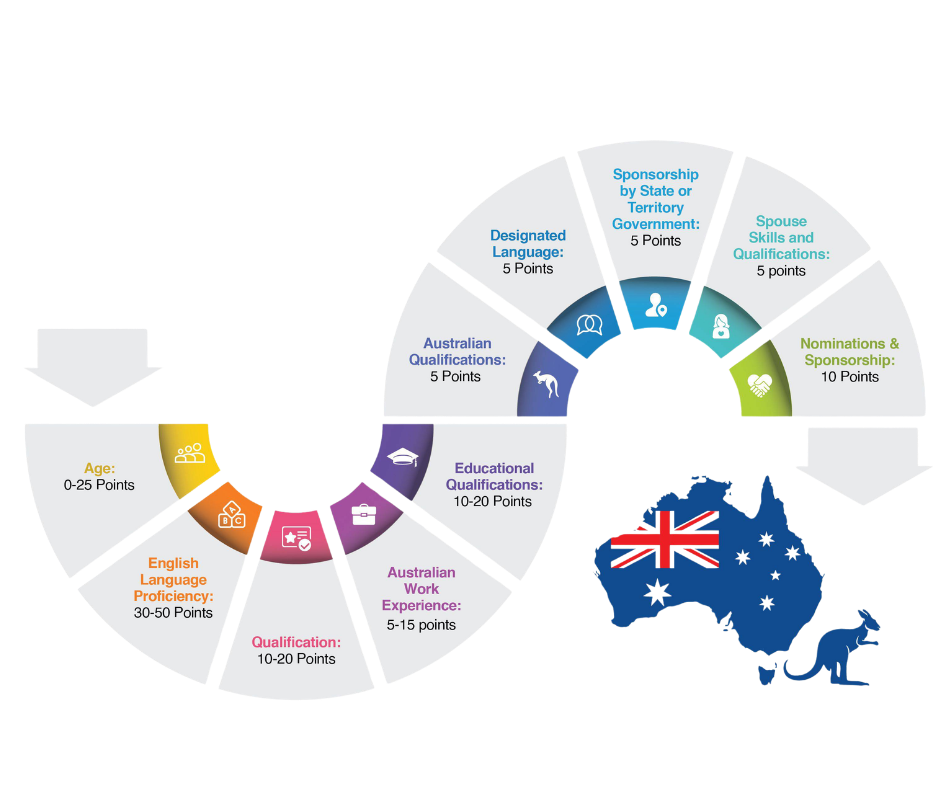
Is 65 Points Enough for Australia PR?
A score of 65 allows you to enter the points-tested system, but it may not be competitive enough to receive an invitation.
Your score may potentially be improved through:
- Proficient or Superior English
- Additional relevant employment experience
- Skilled partner points
- Partner English points
- Credentialled community language
- Australian study
- Professional Year
- Subclass 190 nomination
- Subclass 491 nomination or family sponsorship
Applicants should never claim points they cannot prove. Unsupported or incorrect EOI claims can result in refusal after invitation.
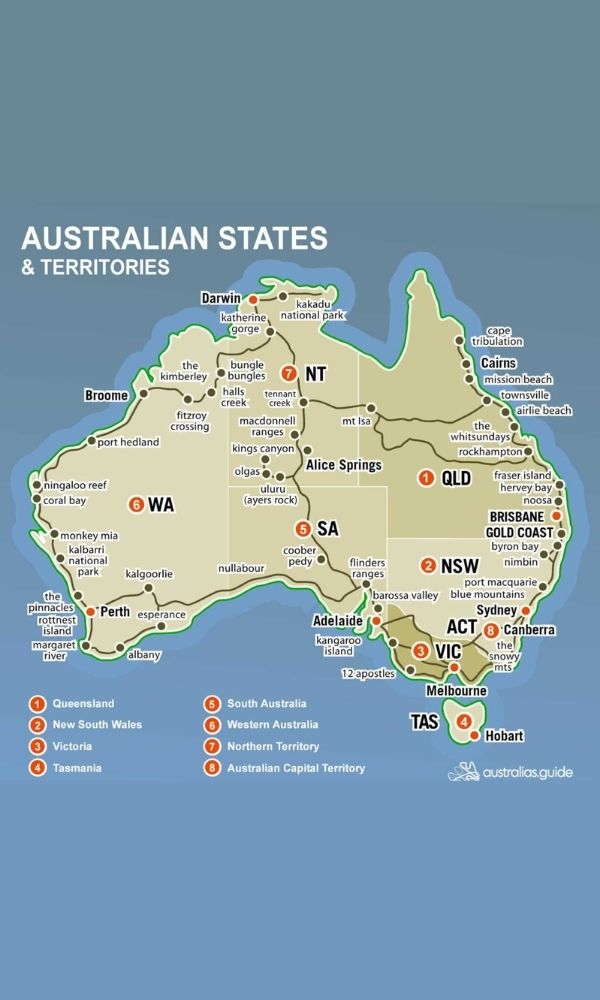
State and Territory Nomination
Australia’s state and territory governments may nominate eligible applicants for Subclass 190 and Subclass 491 visas.
The participating jurisdictions include:
- Australian Capital Territory
- New South Wales
- Northern Territory
- Queensland
- South Australia
- Tasmania
- Victoria
- Western Australia
Each jurisdiction can establish its own:
- Occupation priorities
- Minimum points
- English requirements
- Work-experience requirements
- Employment or job-offer conditions
- Onshore or offshore pathways
- Graduate pathways
- Residence requirements
- Registration of Interest process
- Nomination fees
- Settlement commitments
Meeting published minimum requirements does not guarantee state nomination. States may rank applicants and invite only those who best meet their current workforce and economic priorities.
Australia Skilled Migration Process
Step 1: Complete a Detailed Profile Assessment
Your age, qualifications, occupation, employment history, English ability, marital status and partner profile should be assessed before starting the process.
Step 2: Identify the Correct ANZSCO Occupation
Your nominated occupation must reasonably match your qualification and day-to-day employment duties.
Incorrect occupation selection can result in:
- A negative skills assessment
- Loss of employment points
- State nomination refusal
- Visa refusal
- Unnecessary professional and government costs
Step 3: Plan Your English Test
A higher English result can significantly improve your points and nomination prospects.
Your English strategy should consider:
- Your current points
- The scores required by your preferred state
- Whether your spouse can claim partner points
- The date on which the test is taken
- The validity period for the intended visa
Step 4: Obtain a Skills Assessment
The relevant assessing authority will examine your qualifications and professional background.
Common evidence may include:
- Degree or diploma
- Academic transcripts
- Detailed employment references
- Employment contracts
- Payslips
- Bank statements showing salary deposits
- Tax or social-security records
- Professional registration
- Organisational documents for self-employment
Step 5: Submit a SkillSelect EOI
Your Expression of Interest should accurately record:
- Nominated occupation
- Skills assessment
- English result
- Qualifications
- Skilled employment
- Partner information
- Points claimed
- Visa subclasses selected
An EOI may generally be updated before an invitation if your English score, experience, qualifications or family circumstances change.
Step 6: Pursue State Nomination Where Required
Subclass 190 and state-nominated Subclass 491 applicants may also need to submit:
- A Registration of Interest
- A state nomination application
- Employment evidence
- Settlement or commitment statements
- Evidence of residence
- Evidence of financial capacity
- Documents requested by the relevant jurisdiction
Step 7: Receive an Invitation and Lodge the Visa
After receiving an invitation, the applicant must lodge the visa application within the period specified in the invitation.
The Department may request:
- Identity documents
- Skills-assessment evidence
- English results
- Qualification documents
- Employment evidence
- Police certificates
- Medical examinations
- Relationship evidence
- Further information or verification
An invitation is not a visa approval. The Department independently checks whether the applicant satisfies the visa requirements and can prove all points claimed.
Australia Skilled Visa Government Fees
| Visa Subclass | Main Applicant Charge |
|---|---|
| Subclass 189 | AUD 6,135 |
| Subclass 190 | AUD 6,140 |
| Subclass 491 | AUD 6,140 |
Additional charges apply for accompanying spouses, adult dependants and dependent children. A second instalment may also apply for certain adult family members who do not demonstrate the required level of Functional English.
Other possible expenses include:
- Skills-assessment fee
- English test fee
- State nomination fee
- Medical examination
- Police certificates
- Biometrics
- Translation or certification
- Professional service charges
Visa fees and third-party costs can change. The applicable amount should be reconfirmed before payment.
Can You Include Your Spouse and Children?
Eligible family members can normally be included in a Subclass 189, 190 or 491 application.
This may include:
- A legally married spouse
- An eligible de facto partner
- Dependent children
- Certain older dependent children who meet the applicable definition
Family members must satisfy the relevant identity, relationship, health and character requirements.
Before selecting the main applicant, both spouses should be assessed. In some cases, the husband or wife may have a stronger occupation, age profile, English score or skills-assessment pathway.
Common GSM Application Mistakes
Choosing the Wrong Occupation
Your occupation must match your actual duties and professional background—not merely your job title.
Claiming Unsupported Employment
A basic experience certificate may not be enough. Employment should normally be supported by independent financial and official evidence.
Overclaiming Points
Every point claimed must be valid and provable at the relevant stage.
Using an Expired Assessment or English Test
Document validity should be checked before nomination, invitation and visa lodgement.
Inconsistent Information
Differences between your CV, skills assessment, EOI, state application and visa forms may raise credibility concerns.
Applying Without a State Strategy
State nomination criteria are not identical. An occupation that is eligible federally may not be competitive or available in every jurisdiction.
Ignoring the Partner’s Profile
The spouse may provide additional points or may be the stronger main applicant.


Why Choose Superior Consulting for Your Australia Skilled Migration
Australia skilled migration requires much more than entering information into a points calculator.
- Occupation selection
- Skills-assessment requirements
- English-score planning
- Employment evidence
- Points calculation
- Partner strategy
- State nomination
- Expression of Interest
- Visa documentation
Superior Consulting has provided immigration consulting services since 2004 and brings more than 22 years of industry experience to professional and skilled migration cases.
No ethical consultancy can guarantee visa approval.

Contact us today to begin your
Australia Skilled Immigration
Our Australia Skilled Migration Services
Subject to the agreed scope of service and applicable law, our team may assist with:
- Preliminary eligibility assessment
- Identification of a suitable ANZSCO occupation
- Points calculation for Subclasses 189, 190 and 491
- Skills-assessment planning
- Review of qualification and employment documents
- English-test strategy
- Comparison of husband-and-wife profiles
- State and territory nomination strategy
- SkillSelect EOI support
- Registration of Interest assistance
- State nomination documentation
- Visa-document preparation support
- Health and character document guidance
- Coordination of additional document requests
- Application progress support
No ethical consultant can guarantee a skills assessment, nomination, invitation or visa approval. Decisions remain with the relevant assessing authority, state or territory government and Australian Department of Home Affairs.
Important Information About OMARA Registration
The correct regulatory body is the Office of the Migration Agents Registration Authority—OMARA.
OMARA registration is an individual professional registration associated with a registered migration agent and their Migration Agent Registration Number. It is not a general company licence or accreditation automatically issued to an immigration consulting business.
Official OMARA guidance states that registered migration agents, Australian legal practitioners and exempt persons may lawfully provide immigration assistance in Australia, and that migration agents must be registered with OMARA to provide such assistance in Australia.
Superior Consulting is an independent offshore consultancy providing services from Pakistan and the United Arab Emirates. OMARA registration is therefore not presented as a blanket company-registration requirement merely because an offshore consultancy provides support from outside Australia.
However:
- Superior Consulting does not claim to be an OMARA-registered migration agent.
- We do not display or use a MARN unless a specifically identified registered migration agent is formally involved.
Our offshore services may include preliminary assessment, immigration planning, document-preparation support, skills-assessment coordination and administrative process guidance, subject to applicable law and the agreed scope of service.
Success Stories
Start Your Australia Skilled Migration Assessment
Do not rely only on an online points calculator.
A professional assessment should examine:
- Whether your occupation is eligible
- Whether your qualification matches the occupation
- How your employment will be assessed
- Which points can be proved
- Whether your spouse can improve the case
- Which visa subclass may be suitable
- Which states may consider your profile
- What weaknesses should be addressed before starting
Send Us the Following Information
- Updated CV
- Date of birth
- Marital status
- Highest qualification
- Total professional experience
- Current occupation
- English test result, if available
- Spouse’s qualification and experience
- Preferred Australian state, if any
Speak With Superior Consulting
Superior Head Office Karachi Details:
Pakistan UAN: (021) 111-002-345
Karachi Lines: +92-21-35658107 to 09
Additional Lines: +92-21-35657361 and 35657362
Mobile: +92 334 3522967
WhatsApp: +92 334 3522967
Email: info@superior.com.pk
Dubai Office Details:
Call or WhatsApp: +971 56 171 2877
Alternative UAE contact: +971 50 947 6307
Send Us Email: info@superiorglobal.ae
Book a Professional Consultation
A 30-minute professional consultation is available for PKR 5,000. The consultation fee is adjustable against our professional service fee when you retain Superior Consulting within 30 days, subject to the applicable terms.

FREQUENTLY ASKED QUESTIONS
Important Disclaimer
Australian immigration laws, occupation lists, invitation arrangements, state nomination criteria, English requirements, processing priorities and government fees can change.
A personalised assessment should be completed before you begin the process, incur official costs or make important financial, employment or travel decisions.