

Canada Spousal Sponsorship From Pakistan
Canada’s Spousal Sponsorship Program allows an eligible Canadian citizen or permanent resident to sponsor their spouse or partner to become a Canadian permanent resident.
The program is currently open and may cover:
- Legally married spouses
- Common-law partners
- Conjugal partners in limited circumstances
- Eligible dependent children
There is no points test, occupation list, job offer or general language-test requirement for the sponsored spouse.
Who Can Sponsor a Spouse?
The sponsor must generally:
- Be at least 18 years old
- Be a Canadian citizen, Canadian permanent resident or person registered under the Indian Act
- Sign a sponsorship undertaking
- Demonstrate the ability to provide basic financial support
- Not be receiving social assistance for a reason other than disability
- Meet Canada’s sponsorship and admissibility requirements
A Canadian citizen living outside Canada may sponsor a spouse by showing a genuine plan to return and live in Canada when the sponsored person becomes a permanent resident. A Canadian permanent resident living outside Canada cannot submit a qualifying sponsorship until residing in Canada.
Who Can Be Sponsored?
A Spouse can be sponsored.
A spouse must:
- Be legally married to the sponsor
- Be at least 18 years old
- Be in a genuine relationship
- Not have entered the marriage mainly to obtain immigration status
Common-Law Partner
A common-law couple must generally have lived together in a marriage-like relationship for at least 12 consecutive months.
Conjugal Partner
This category is generally limited to a partner who:
- Lives outside Canada
- Has been in a committed relationship with the sponsor for at least one year
- Cannot reasonably marry or live with the sponsor because of serious legal, immigration, religious, cultural or similar barriers
The conjugal category is not simply an alternative for couples who prefer not to marry or have not completed 12 months of cohabitation.
Main Relationship Evidence
A strong application may include:
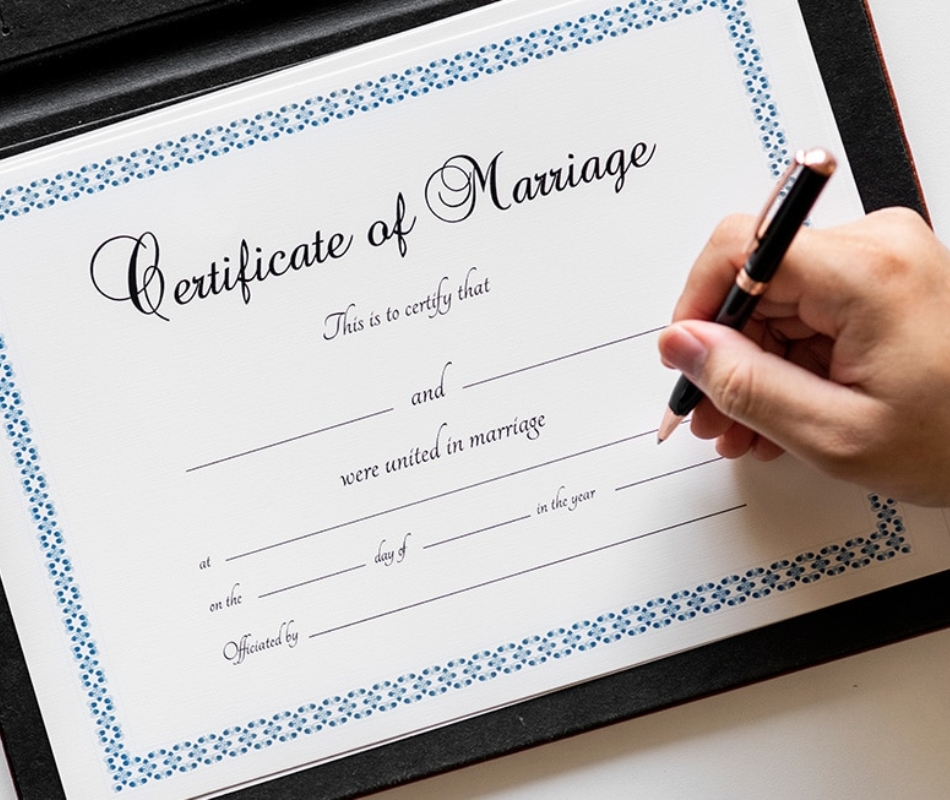
- Marriage certificate
- Joint tenancy or property documents
- Joint bank accounts or expenses
- Travel history
- Wedding and family photographs
- Communication records
- Money transfers
- Insurance or beneficiary records
- Statements from relatives and friends
- Evidence of visits and cohabitation
- Written relationship histories from both partners
A marriage certificate alone may not be enough. IRCC assesses whether the relationship is genuine and was not entered primarily for immigration purposes.
Is There an Income Requirement?
In most spouse and partner sponsorship cases, there is no fixed minimum income threshold.
The sponsor must still show that they can provide basic needs and must sign a legally binding undertaking. A formal minimum-income calculation generally applies only in unusual cases involving a sponsored partner’s dependent child who also has a dependent child.
Sponsorship Undertaking
For provinces outside Quebec, the sponsor is financially responsible for the sponsored spouse or partner for three years from the date they become a permanent resident.
The undertaking continues even if:
- The relationship ends
- The couple divorces
- The sponsor loses employment
- Either person moves to another province or country
- The sponsored person later becomes a Canadian citizen
If the sponsored person receives provincial social assistance during the undertaking, the sponsor may be required to repay it.
Quebec residents must complete a separate provincial undertaking after IRCC instructs them to do so.
Outside Canada vs In-Canada Sponsorship
When sponsoring a spouse or partner for Canadian permanent residence, it is important to choose the correct application pathway based on your circumstances. Canada offers two primary routes: applying from outside Canada (Family Class) or from within Canada (In-Canada/Spouse or Common-Law Partner in Canada Class). Each option has different requirements, processing considerations, and benefits depending on factors such as the applicant’s location, immigration status, and travel needs.
Family Class — Outside Canada
This route may be appropriate where:
- The sponsored spouse lives outside Canada
- The applicant needs to travel regularly
- A Canadian citizen sponsor is also living abroad and plans to return
- The applicant does not have valid Canadian temporary status
In-Canada Sponsorship
This route may be appropriate where:
- The sponsored spouse is already living in Canada with valid temporary status
- The couple intends to remain together in Canada throughout the application process
- The applicant is eligible to apply for an open work permit while the application is in process
- Travel outside Canada is limited, as re-entry is not guaranteed during processing
Spouse or Common-Law Partner in Canada Class
This route may be suitable where the couple is already living together in Canada and the sponsored person has qualifying temporary status or is eligible under an applicable public policy.
Choosing the correct route matters, particularly where the applicant may need to travel outside Canada while the application is being processed.
A marriage certificate alone does not prove that a relationship is genuine and continuing.
Open Work Permit Option
A sponsored spouse or partner living in Canada with the sponsor may be eligible to apply for an open work permit after receiving an Acknowledgement of Receipt confirming that the permanent-residence application is complete and being processed.
The applicant must generally:
- Be living in Canada
- Be living with the sponsor
- Be included in the permanent-residence application
- Remain in a genuine relationship
- Hold or qualify for the required temporary status
Special rules may apply where existing temporary status will expire within two weeks.
Current Government Fees
| Government Charge | Current Fee |
|---|---|
| Spouse or partner sponsorship, including RPRF | CAD 1,260 |
| Sponsorship without upfront RPRF | CAD 660 |
| Each accompanying dependent child | CAD 180 |
| Biometrics—individual | CAD 85 |
| Biometrics—qualifying family maximum | CAD 170 |
The CAD 1,260 spouse fee includes the sponsorship fee, principal applicant processing fee and CAD 600 Right of Permanent Residence Fee.
Police certificates, medical examinations, translations and document-certification costs are additional.
Dependent Children
Children may generally be included where they:
- Are under 22 years old
- Are unmarried and do not have a common-law partner
Canadian Spousal Visa Application Process
Applying for a Canadian spousal visa involves a structured process that requires careful preparation, accurate documentation, and timely responses at each stage. Both the sponsor and the applicant must meet specific eligibility criteria, and the application must clearly demonstrate a genuine relationship. Below is a step-by-step overview of the process to help ensure a smooth and successful application:
1. Confirm Sponsor and Relationship Eligibility
The first step is to ensure that the sponsor meets all eligibility requirements, including citizenship or permanent resident status, financial capability (where applicable), and admissibility. At the same time, the relationship must qualify under Canadian immigration rules (spouse, common-law, or conjugal partner) and be genuine.
2. Select the Outside-Canada or In-Canada Route
Applicants must choose the correct application stream based on their circumstances—whether applying from outside Canada (Family Class) or within Canada (Spouse or Common-Law Partner in Canada Class). This decision affects processing, travel flexibility, and eligibility for work permits.
3. Prepare Sponsorship and Permanent-Residence Forms
Both the sponsor and applicant are required to complete specific application forms. These must be filled out accurately and consistently, ensuring all details match the supporting documentation to avoid delays or refusals.
4. Organise Relationship, Identity and Financial Evidence
A comprehensive set of supporting documents must be prepared, including proof of identity, civil status documents, and strong evidence of a genuine relationship. Financial documents may also be required to demonstrate the sponsor’s ability to support the applicant.
5. Submit the Complete Application Online
The application is submitted through the official online portal. All forms, documents, and required fees must be included at the time of submission to avoid processing delays or the application being returned as incomplete.
6. Complete Biometrics, Medical and Police Requirements
After submission, the applicant will be instructed to provide biometrics (fingerprints and photo), undergo a medical examination, and submit police clearance certificates from relevant countries to meet health and security requirements.
7. Respond to Any IRCC Request or Interview Notice
Immigration authorities may request additional documents or schedule an interview to verify details. Prompt and accurate responses are essential to keep the application progressing smoothly.
8. Complete Permanent-Residence Confirmation After Approval
Once the application is approved, the applicant must complete the final steps to confirm permanent residence. This may include receiving a Confirmation of Permanent Residence (COPR) and, if outside Canada, entering the country to activate their status.
IRCC processing times vary according to the application class, location, completeness, security checks and case complexity. Applicants should consult IRCC’s live processing-time tool rather than relying on a fixed advertised timeline.
Who May Be Unable to Sponsor?
Applicants must notify the Department if the relationship ends or materially changes.
In limited circumstances, the application may continue where:
- Were sponsored as a spouse and became a permanent resident less than five years ago
- Are still within the three-year undertaking for a previously sponsored spouse
- Are imprisoned
- Are subject to an undischarged bankruptcy
- Are in default of immigration loans, support payments or a previous undertaking
- Receive social assistance for a reason other than disability
- Are subject to certain serious criminal or sponsorship restrictions
Common Reasons Applications Are Refused
- Weak evidence of a genuine relationship
- Contradictory relationship timelines
- Limited evidence of communication or visits
- Undisclosed previous marriages or children
- Marriage entered mainly for immigration purposes
- Missing police or medical documents
- Sponsor is legally ineligible
- Important information differs across forms
- False documents or misrepresentation
- Failure to respond to IRCC requests

Start Your Canada Spousal Sponsorship Assessment
Send us the following:
- Applicant and sponsor passports
- Sponsor’s Canadian status
- Current countries of residence
- Marriage certificate
- Relationship start date
- Cohabitation history
- Travel and communication evidence
- Details of previous marriages
- Details of children
- Previous Canadian visa history
- Any previous sponsorships


Why Choose Superior Consulting for Your Canada Spousal Visa Application?
Superior Consulting has provided immigration-documentation and application-support services since 2004.
Our Canada Spousal Sponsorship support may include:
- Sponsor eligibility assessment
- Spouse, common-law or conjugal category review
- In-Canada versus outside-Canada strategy
- Relationship-evidence planning
- Application-form assistance
- Relationship statement preparation
- Police and medical guidance
- Dependent-child assessment
- Open work-permit guidance
- Interview preparation
- IRCC request-response support
- Coordination with an authorised Canadian representative where required
No ethical consultancy can guarantee visa approval.

Contact us today
Canada Spousal Visa
Contact Superior Consulting
Superior Head Office Karachi Details:
Pakistan UAN: (021) 111-002-345
Karachi Lines: +92-21-35658107 to 09
Additional Lines: +92-21-35657361 and 35657362
Mobile: +92 334 3522967
WhatsApp: +92 334 3522967
Email: info@superior.com.pk
Dubai Office Details:
Call or WhatsApp: +971 56 171 2877
Alternative UAE contact: +971 50 947 6307
Send Us Email: info@superiorglobal.ae
Book a Professional Consultation
A 30-minute professional consultation is available for PKR 5,000. The consultation fee is adjustable against our professional service fee when you retain Superior Consulting within 30 days, subject to the applicable terms.

FREQUENTLY ASKED QUESTIONS
Canadian Immigration Services Disclosure
Superior Consulting provides offshore assessment, documentation and process-coordination services from Pakistan and the United Arab Emirates.
Paid Canadian immigration advice or representation before IRCC must be provided by an authorised Canadian representative, such as a Canadian lawyer or paralegal in good standing, a Quebec notary or a licensed Canadian immigration consultant in good standing. Where formal representation is required, the authorised professional should be specifically identified.
Important Disclaimer
Canadian family-sponsorship rules, fees, processing times, open work-permit policies and documentary requirements may change.